This post is a clear example of how interesting it is to bring together concepts as far apart in time as the art of origami and the geometric design that has become so fashionable in recent years.
It’s true that geometric graphic design has its origins in, and draws directly from, the art of origami, since it was one of its logical evolutions, even if it hadn’t been exploited the way it is now.
For anyone unfamiliar, the art of origami originates in Eastern culture, since it’s worth remembering that paper reached Asia via China. Origami consists of creating figures out of paper, without being able to use scissors or glue.
So there are countless possibilities, from the humble but effective paper plane we were all taught to fold to seemingly impossible figures.
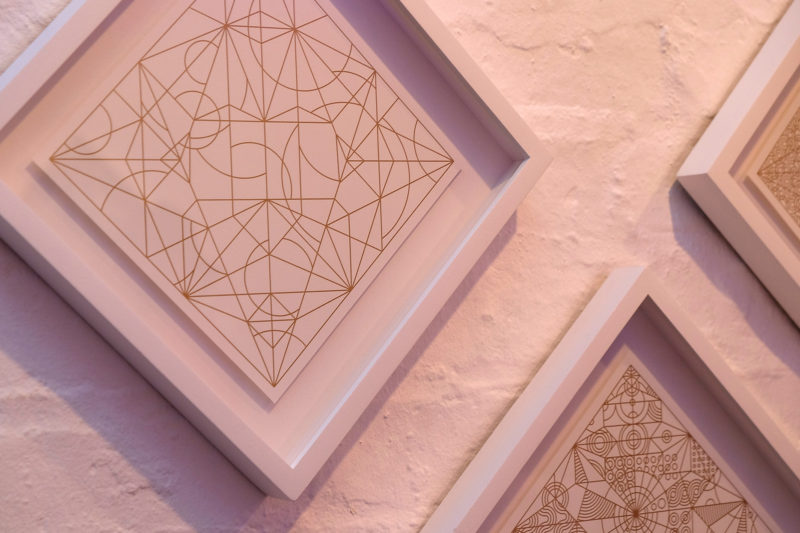
On the other hand, geometric graphic design has become very fashionable lately, and with it we’ve seen spectacular work in logo, poster and typeface design.
On that note, we can’t overlook the fact that geometric graphic design was used well before the current surge.
So it’s only right to highlight its use, whole or in part, in Art Deco, Cubism, Futurism and Pop Art.
At the «Parallel» exhibition you could see origami and geometric graphic design meet, with the artist Ross Symons (aka White on Rice) showing his work.
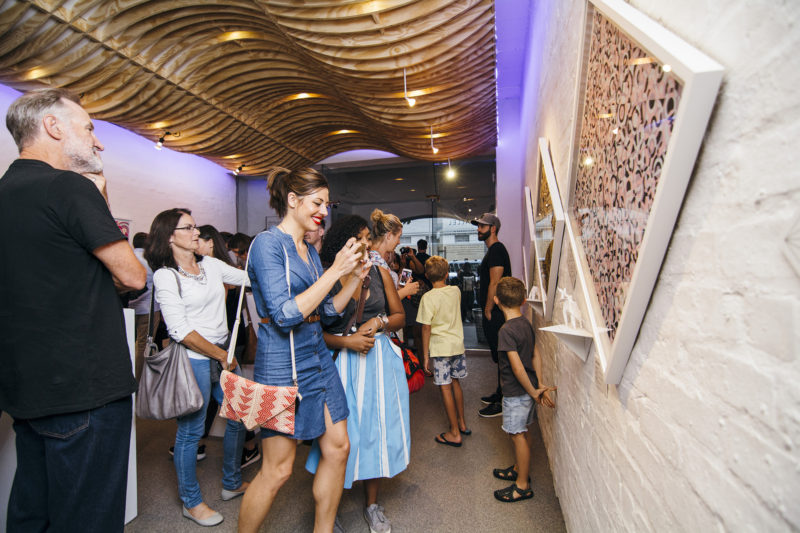
At the RedBull Studios in Cape Town you could see De Si’s paintings and Ross’s paper work, all of it marked by bright, vibrant colour and the intricate structures of his pieces.
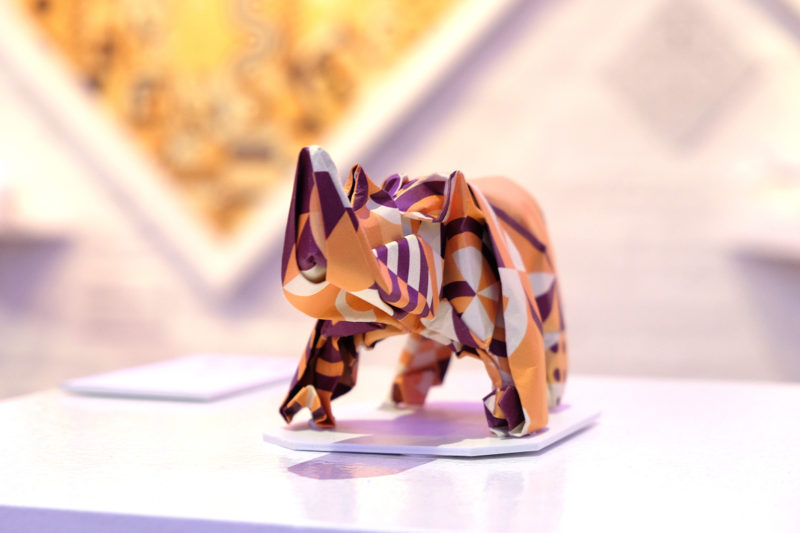
Since his first show, while Ross was making a name for himself with his origami, he was also starting to produce work for a range of brands.
Geometric graphic design consists of creating a work of any kind (animation, drawing, video game, aesthetic design and so on) showing only the surface of objects through geometric shapes.
The idea originally came from low poly, a polygon mesh for 3D graphics which divided the surface of objects into a small number of polygons.
From that mesh, those graphics could be rendered faster since they carry less detail.
So, in the eagerness to recover techniques and concepts from the past, many graphic artists turned their attention to applying them to their own work.
Today that optical effect is created deliberately to arrive at something new, bringing out the form through its essence rather than its detail.