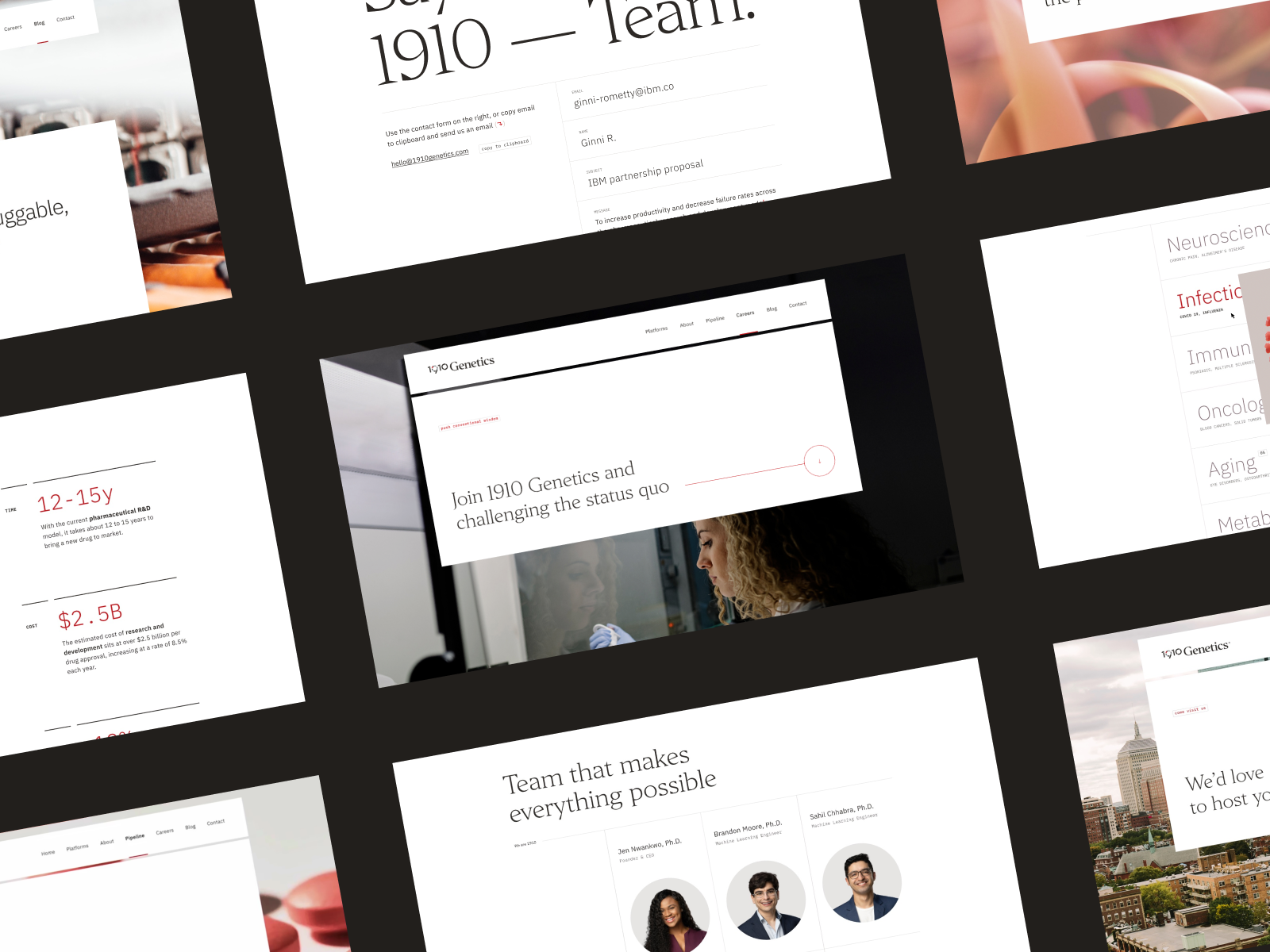
Header visual reference: Bright Biotech · design by Lyon & Lyon · Project and credits on Awwwards.
A pharmaceutical website can look like a straightforward corporate project until someone mentions three markets, two product catalogues and a professional area. Then a folder arrives labelled “final documentation”. There is another folder inside it, of course. The budget changes when those separate requests become a system somebody must design, approve and maintain.
If you are planning a pharmaceutical company website for 2027, this guide explains what shapes the investment, which responsibilities belong in a proposal and how to compare suppliers whose headline prices may describe very different projects.
My published JED starting prices are corporate websites from €6,000 and platforms and integrations from €12,000. These are general studio references current when this guide was prepared in October 2026. They are not a pharmaceutical industry average or a fixed quote for every laboratory. Your proposal needs an agreed scope, content responsibilities and technical dependencies.
1. Define which kind of pharmaceutical website you are buying
A company introducing its capabilities to potential partners needs a different website from a business managing a large product catalogue. A platform that passes requests into internal systems adds another layer again. Calling all three a “pharma website” does very little to explain their cost.
| Project | What needs defining |
|---|---|
| Corporate website | Company story, audiences, markets, team, enquiries and editorial tools. |
| Website with a catalogue | Product structure, filters, page models, documents and update responsibilities. |
| Professional environment | User journeys, access requirements, account management and client-approved conditions. |
| Connected platform | Processes, data, permissions, integrations, exceptions and operational continuity. |
Start with a task for each audience. “A distributor finds the relevant product line and reaches the right market contact” is useful. “An innovative digital experience” leaves rather more room for interpretation. A task can become a journey, a page model and eventually an acceptance check.
2. The work behind the quote
I would expect a useful proposal to distinguish architecture, design, development, content and launch. These do not need five different suppliers. They need clear boundaries so that everyone knows who is preparing the product information before the project reaches the product pages.
Information architecture. This means organising audiences, sections, content types and routes through the website. Twenty pages containing several different product and document models may require more definition than eighty similar pages. Page count is a starting clue, not a reliable pricing model on its own.
Design. The visual system has to accommodate identity, detailed information, navigation, documents and enquiries. Use real examples during design: a long product name, a complex page and a document with several language versions. Layouts tested only with short placeholder text tend to be optimistic about life.
Development and editing. This covers templates, structured fields, editorial permissions, search and connections. Ask what your team can update independently and which changes require technical support. That distinction affects both the initial build and the cost of operating the website afterwards.
Content and transition. Writing, translation, review, entry and checking are separate tasks. A company supplying approved copy and a classified document library needs a different scope from one asking the supplier to reconstruct its content from an older website. The quote should make that difference visible.
3. Markets and languages multiply more than words
A second language does not necessarily mean building a second website from scratch. It does require decisions about shared structure, products, documents and forms. Translating the same content is one situation. Supporting a market with its own catalogue and contacts is another.
Consider a company with an international English presentation and a Spanish section containing market-specific information. You need to establish which pages have equivalents, what happens when they do not and who maintains each version. Duplicating everything and hiding the unwanted pieces later is rarely a satisfying plan.
Keep language, territory and audience separate in the brief. A professional in Spain may read English. A distributor and a prospective employee may need completely different resources. Those distinctions affect navigation, editing and testing; they should not arrive as an extra request just before launch.
A practical planning sheet records market, language, available content, owner and enquiry route. If international structure is a central issue, the multilingual web design service explains the wider approach. Translating words is only one part of making the different versions usable.
4. Catalogues, documents and access need specific requirements
“We have fifty products” does not define a catalogue. The important questions concern fields, relationships, filters and the original source of the information. If the same details live in a spreadsheet, an ERP and the website, decide which system owns them and how updates travel.
Bring several representative entries into the design process: a simple product, a document-heavy product and an awkward exception. That last one is especially valuable. Exceptions rarely appear in the beautiful reference screenshot, but they will certainly appear in the finished website.
For documents, define classification, language, version information and ownership. When a PDF is replaced, should its address stay the same? Do other teams already link to it? Who checks that a page points to the approved file? A document library needs an operating method as well as a download button.
Ask to see one complete editorial task in the proposed system: replacing a document, updating its associated page and checking the relevant language versions. This small demonstration reveals whether the workflow matches your team. It also makes training and handover requirements easier to specify than a general promise of an easy-to-use CMS, which can mean quite different things to different people.
Where content has access conditions, the pharmaceutical company needs to supply the applicable requirements and approval criteria. The technical journey can then be specified against them. A password screen does not, by itself, establish that a particular publication arrangement is appropriate. Design and development implement the conditions approved by the responsible client team.
5. Three scope scenarios for a useful budget conversation
The following examples are hypothetical planning scenarios, not client quotations or reported results. They show why projects in the same industry can require very different amounts of work.
Scenario A: a corporate presence. The company needs to explain its activity, team and business areas in two languages, with departmental enquiries. Approved text and images are available. Work focuses on structure, visual direction, templates and editing. JED’s corporate starting point, from €6,000, opens the conversation; the actual proposal still needs to confirm deliverables.
Scenario B: an international corporate site and catalogue. Structured entries, documents, filters and market differences are added. The team needs to maintain information without rebuilding individual pages. Data modelling, content preparation and testing different journeys become significant. Multiplying a page price by the number of products misses much of that work.
Scenario C: an operational platform. A user submits a request that must move through internal systems. Statuses, permissions, responses and errors all need a defined behaviour. JED platforms and integrations start from €12,000, but a connection cannot be scoped properly without knowing what it exchanges, with which system and under what conditions.
For each scenario, ask about exclusions: copywriting, translation, photography, licences, hosting, additional content entry and later changes. Separate procurement can be perfectly sensible. Discovering it after approval is the less enjoyable version.
6. What the real projects demonstrate
Laboratorios Rubió brings together its product portfolio, international expansion and corporate channels in a shared digital environment. It provides a useful reference for discussing how group activity, product information and relationships with professionals and partners can sit within one structure.
Actúa Pharma illustrates a different challenge: organising a broad consumer healthcare offer by product line and context of use, with detailed entries and a pharmacy finder. Connecting product research with the point of sale calls for more than a short corporate presentation.
Consulte su vacuna is a B2B ordering platform for pharmacies and wholesalers, including requests, tracking and an ERP connection. It is a process and integration reference, rather than a patient vaccination advice website.
These projects demonstrate kinds of work. Their budgets cannot be inferred from screenshots, and I am not assigning unverified commercial results to them. For your brief, the useful exercise is to identify similar decisions and then specify the parts that need a different response.
7. Review and approval belong in the schedule
A website can have relatively few screens and a substantial number of stakeholders. Before agreeing a launch date, identify who approves structure, design, copy, translations and technical journeys. If these depend on different people, the schedule needs to reflect their availability.
Reviewing a complete representative page is usually more productive than approving an attractive empty layout. A product page containing real fields, documents and a mobile arrangement settles several questions together. Discovering the actual content after the visual system is approved tends to send work backwards.
Look for clear milestones and defined review rounds in the proposal. Ask what happens when content is late or a new market is added. You do not need to predict every future change. You do need a shared way to distinguish a refinement from additional scope.
Appoint one person to consolidate feedback before it reaches the design team. That person does not replace specialist approval; they make conflicting comments visible and help resolve them. Two contradictory instructions inside separate email chains are a surprisingly efficient way to spend a project budget without improving the website.
8. Migration and maintenance continue beyond launch
If there is an existing website, inventory the pages, documents and journeys that must remain available. Agree destinations for changing URLs. Check forms, available measurement and resources already used by other teams. Moving the homepage is only a small part of moving a website.
After launch, separate technical maintenance, editorial updates and new features. Establish who responds to a fault, which backups and updates are included and how integrations are checked. An hours allowance can work well when its coverage and priorities are clear.
A simple editorial protocol is also valuable: who uploads a document, who confirms its version and where a withdrawal is communicated. These responsibilities may be less photogenic than the homepage, but they affect whether the website stays useful.
Ask for a handover using your own content. The editor should be able to complete a typical update and understand what requires further help. Documentation that explains every button but never shows the team’s actual task is technically present and practically disappointing.
9. What to send when requesting a proposal
Start with the objective, audiences, markets, a representative content sample and the systems involved. Add the existing website, desired timing and people responsible for review. Open questions are welcome: identifying them is part of defining the project properly.
For a project with substantial dependencies, the JED diagnostic costs €1,500 and includes a 90-minute session and a strategic and technical plan. Under the published conditions, it is credited against the first invoice if the project continues. It helps turn uncertainty into decisions before the full build is quoted.
Explore web design for pharmaceutical companies and the pharmaceutical website design references for 2027. References give a visual conversation something concrete to work with. A defined scope gives the budget something equally concrete. A good start needs both.
Before requesting a proposal, use the guide to writing a pharmaceutical website brief to organise audiences, content samples, approval responsibilities and technical dependencies.