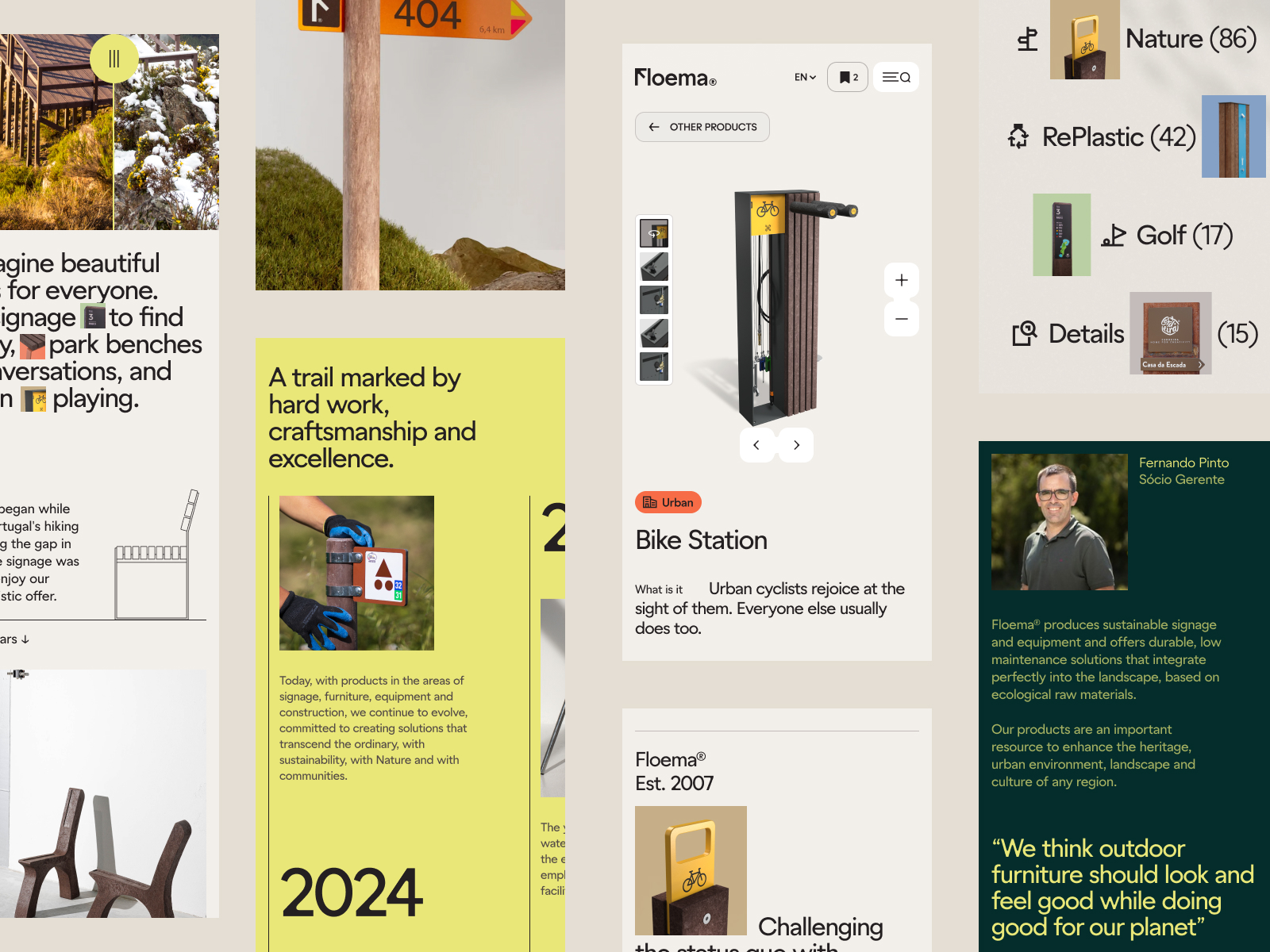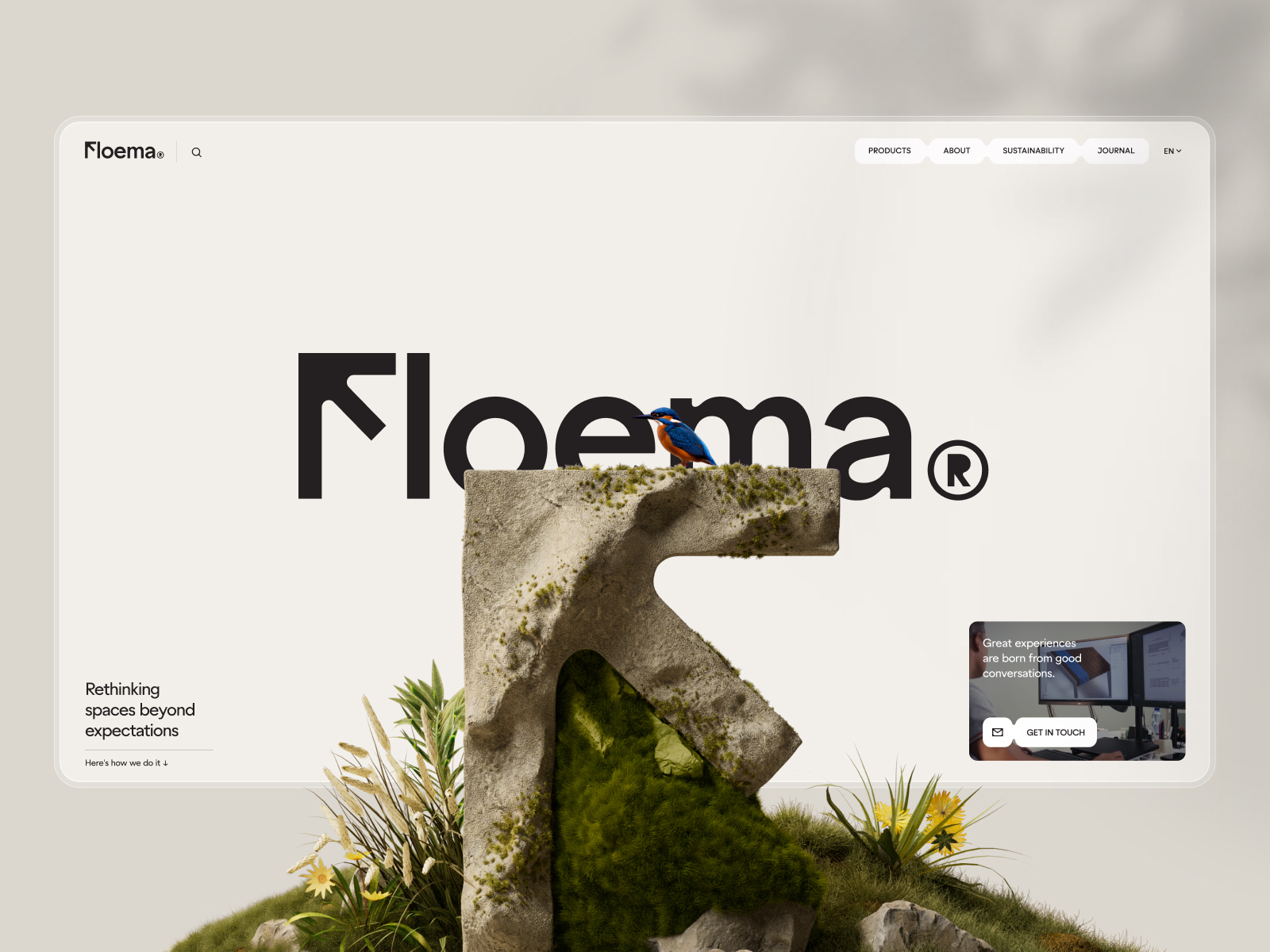
Header image: Floema · website design by Bürocratik · Project and credits on Awwwards.
Web design proposals can describe surprisingly different projects. One buys a set of screens. Another includes copy and development. A third assumes someone on your team will upload two hundred products on a Friday afternoon. The price often becomes clearer when that someone enters the conversation.
If you are looking for the cost of hiring a senior freelance web designer for a 2027 project, start with the work you want to hand over. Designing an interface, developing the website and preparing its content involve related tasks with different deliverables and responsibilities. A useful proposal brings them together.
My published starting point for a corporate freelance web design project is from €6,000. This guide uses JED’s current references to help plan a 2027 commission. Your proposal confirms the scope and project price. Other suppliers will structure their services and fees differently.
What a senior freelance designer brings to the project
Experience shows up in the questions asked before design begins. Which service should the website introduce first? What does a prospective client need to understand before getting in touch? Which materials exist? Who will publish the next project once the designer has handed over the website? Answering those questions takes work and can save several rounds later.
A senior designer can help organise that discussion and establish a visual direction. They should also explain where photography, writing, translation or specialist development requires another contributor. Look for named responsibilities and a clear point of contact. One person can coordinate several disciplines, provided the proposal explains how that arrangement works.
Look beyond the opening screen when reviewing work. A striking homepage demonstrates visual judgement. A long product page, mobile navigation and a usable project archive reveal other parts of the job. Ask to see how someone publishes real content. That is often where the presentation becomes a much more useful conversation.
JED’s published starting prices
These references are published on my website. They help locate the type of engagement before we discuss the details of your business. They are starting points. A shop with demanding integrations can involve more work than a corporate website with a substantial amount of straightforward content.
| Project | Starting point | Scope to define |
|---|---|---|
| Corporate website | From €6,000 | Brand, content, structure, design, bespoke WordPress and launch. |
| Online shop | From €8,000 | Catalogue, purchasing, payments, content and operations. |
| Platform and integrations | From €12,000 | Processes, data, permissions and connections between systems. |
You can check these references in the project investment information on the homepage. When requesting a quotation, also establish the treatment of taxes, licences, hosting and recurring services. A project figure becomes less useful when important parts of the work are left waiting on a separate invoice.
For a project whose direction is still open, I offer a diagnostic session and a strategic and technical execution plan for €1,500. That fee is deducted from the first invoice if the project continues. It is a defined engagement with its own output: priorities, decisions and an execution plan. The website diagnostic page explains the format.
Page count tells only part of the story
Consider two ten-page websites. One presents a consultancy, three services, a team and a contact page. The other includes an industrial range, downloadable documents, filtering and two languages. The page counts match. The design and development tasks differ considerably. Counting pages helps inventory content, but it leaves out much of the system that must support it.
Templates and content types help make the discussion more precise. One project-page structure might accommodate landscape and portrait photographs, drawings, credits and a longer narrative. Designing and testing that structure is one task. Adding further projects to the established structure is another, with someone responsible for preparing and entering the material.
In a hypothetical brief, one business might supply reviewed copy and images, leaving the designer to organise and present them. Another might need interviews, image selection, editing and content entry. Similar-looking websites can emerge from very different commissions. Send a list of the material you already have alongside the proposed page map.
Bring design, development and content into the same proposal
Ask what “design included” means. It might describe reference screens, a component system or the design and implementation of every agreed template. Request an example of a deliverable. Establish how navigation, forms, longer content and mobile states will be reviewed. A picture in a presentation leaves many behaviours open to interpretation.
If your business already has a technical team, you can commission visual direction and interface design for that team to implement. Agree the components, interaction states and support during development. If you also want to delegate implementation, my freelance web development service provides a starting point for reviewing those requirements and dependencies.
Content deserves the same precision. Who writes the service pages? Who chooses the photographs? Who reviews the English copy? “Content supplied by the client” needs practical detail: formats, quantities, owners and delivery dates. Otherwise a carefully planned schedule can end up waiting for an empty folder to fill itself.
The decisions that change a web design budget
Visual direction. A distinctive design involves exploring, choosing and developing an approach using the brand’s actual content. Illustration, animation and an unusual portfolio presentation need a defined scope. References help communicate ambition. The next step is to agree which ideas will be designed, implemented and tested for your project.
Editing. A team publishing projects, news or products needs an editing experience that matches those tasks. Clear fields, suitable image choices and understandable composition rules can make routine updates easier. In a bespoke WordPress project, we review those tasks with representative content before considering the editing system complete.
Languages and migration. An English version needs adapted content, coherent navigation and review. An existing website may contain pages, downloads and search visibility worth examining before addresses change. Define the material to move and the owner of each language version. Translating a menu is a small task; preparing the whole website is a much wider engagement.
Connections. A form that sends an email and a CRM integration involve different dependencies. Estimating a connection requires knowing the data, the systems’ owners and the expected behaviour when something fails. A technical review may become a separate phase if documentation or requirements are still missing.
If you are still choosing the type of collaboration, the freelance web designer or agency guide compares teams, communication and continuity to help frame that decision.
Compare proposals against the same responsibilities
Prepare a short set of questions for each supplier. Which pages and templates are included? What does design cover? Who implements the website? How many review rounds are planned, and how are comments consolidated? Which content will your team enter? Which checks happen before launch? What support follows the handover?
Then review the exclusions. A proposal can be entirely appropriate while excluding photography, translation or maintenance. You need that information to complete the budget and organise the work. Comparing the final figures alone can produce an awkward conclusion when the engagements have different boundaries.
Look for a simple change process. If another language or a new feature appears midway through the project, the additional work and its effect on the fee and schedule should be agreed before implementation. Room to develop the brief works better when both parties understand the version currently being built.
For an international engagement, establish the quotation currency, working language and who reviews localised material. If your stakeholders operate across time zones, agree how decisions are recorded and reviewed. These are practical coordination questions. They help a remote project move forward without turning every small decision into another meeting.
Read the schedule alongside the fee. A project may involve a few weeks of production spread over a longer period because materials arrive in stages or several people approve decisions. Ask for a sequence of deliverables and identify who can approve each one. A useful date comes with the information and materials required to meet it.
Before reviewing a project-page design, for example, prepare a representative set of content. If final photography is still in production, agree an intermediate review using provisional material and another check when the images arrive. Include those steps in the plan. That helps prevent an approved composition from needing extensive changes to accommodate the actual story.
At handover, establish who holds access to the website, service accounts and project files. Ask which documentation you receive, what your team will learn and how they can request help. Publishing the website and confidently maintaining a service page are separate milestones. The proposal should allow for both when they form part of the engagement.
Review licences in the same way. A font, plugin or platform may have its own usage and renewal conditions. Establish what is purchased in the business’s name, what the supplier manages and what happens if the collaboration changes later. Those details help you understand the cost of maintaining the website through the following year.
Share a maximum budget at the beginning if you have one. It allows a sensible first phase and a deliberate choice about where to focus design work. A catalogue might start with the priority product families; a portfolio might begin with the projects that best explain the practice. The proposal should identify what launches first and what can follow.
Finally, discuss the first weeks of use. Editing questions, faults and requests for additional features require different responses. A proposal can include launch support while defining future development separately. That is an easier conversation to have before publication, rather than while the first campaign is waiting for its destination page.
Use the portfolio to ask better questions
Look for similarities in the problems a project addresses. An industrial business may need to organise divisions and technical documents. An architecture practice may need photography and drawings within its project pages. The useful connection might be the content structure or publishing workflow, alongside the visual style that catches your eye.
The Disproquima case presents a technical offer through divisions, product information and corporate resources. Studio Arcos demonstrates a different need: bringing work, drawings and process into project pages. Use those examples to discuss the material your website must accommodate. Neither case publishes a project fee, so it should not be treated as a price example.
The web design selection for 2027 can help prepare that conversation too. Choose two or three references and write down what interests you: image scale, the project archive or a particular navigation pattern. An observation gives the designer much more to work with than twenty links and an instruction to combine them all.
What to send for your 2027 website project
A short explanation of the business, the current website and the main requirement is enough to begin. Add priority services, languages, available materials and the people reviewing the work. If you have an important date, explain what happens then: a trade fair, launch or opening. We can assess what needs to be ready first.
You do not need to arrive with the solution already drawn. Explain what is difficult today: publishing projects, describing the offer, maintaining language versions or receiving unsuitable enquiries. That context helps determine whether the useful next step is a complete website, a defined phase or a few carefully chosen improvements.
Tell me about your project and we can assess the fit. I’m Jordi Ensenyat, founder of Code Barcelona. My work brings visual judgement, design and development together so the website has a clear personality and your team can keep using it after launch. The proposal follows those responsibilities.